









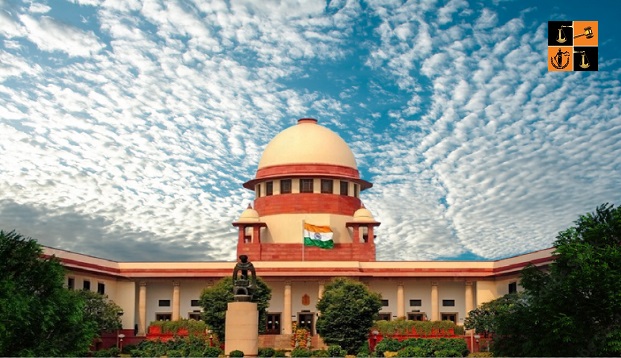
Recently, the Supreme Court examined the scope of Order XV Rule 5 of the Code of Civil Procedure, 1908, in a dispute concerning striking off a tenant’s defence for alleged non-compliance with mandatory rent deposit requirements during the pendency of an eviction suit. The Court considered whether procedural defaults should automatically result in striking off the defence or whether courts retain discretion while dealing with such cases.
Brief Facts :
The dispute arose out of an eviction and recovery suit filed under Section 15 of the Provincial Small Causes Courts Act read with Section 106 of the Transfer of Property Act, 1882. The landlords alleged that the tenant had defaulted in payment of rent after revision of monthly rent and despite issuance of a legal notice terminating tenancy.
During the proceedings, the landlords moved an application under Order XV Rule 5 CPC seeking striking off the tenant’s defence for failure to deposit arrears of rent, damages, and costs. The tenant, on the other hand, challenged the maintainability of the suit under the Uttar Pradesh Regulation of Urban Premises Tenancy Act, 2021 and also sought condonation of delay in depositing rent.
The Trial Court struck off the tenant’s defence for non-compliance with Order XV Rule 5 CPC. However, the High Court later granted the tenant time to deposit rent and subsequently extended the timeline despite earlier conditional directions. Aggrieved by these orders, the landlords approached the Supreme Court.
Contentions of the Appellant :
The counsel for the Appellants argued that the High Court erred in interfering with the Trial Court’s order despite admitted defaults by the tenant. It was submitted that the tenant failed to comply with the mandatory requirements of Order XV Rule 5 CPC by not depositing arrears, damages, and costs within the prescribed time. They further contended that the High Court had initially granted a final opportunity subject to a condition that failure to deposit rent would result in striking off the defence, yet later extended time contrary to its own order. The appellants also alleged deliberate and contumacious conduct on the part of the tenant in delaying the proceedings.
Contentions of the Respondent:
The counsel for the Respondent contended that the delay in deposit was minimal and occurred due to bona fide reasons. It was argued that the High Court rightly exercised discretion in extending time and that striking off the defence under Order XV Rule 5 CPC is a drastic consequence which should not be imposed mechanically.
Reliance was placed on Bimal Chand Jain v. Sri Gopal Agarwal and Santosh Mehta v. Om Prakash, wherein the Supreme Court held that the power to strike off defence is discretionary and should be exercised only in cases of wilful or contumacious default. The Court also referred to Siraj Ahmad Siddiqui v. Prem Nath Kapoor on determination of the “first date of hearing” and Salem Advocate Bar Association v. Union of India reiterating that procedural law is intended to advance justice.
Observation of the Court :
The Supreme Court observed that though Order XV Rule 5 CPC requires tenants to deposit admitted rent during pendency of proceedings, the power to strike off defence cannot be exercised mechanically. The Court reiterated that such a consequence is penal in nature and courts must examine whether the default was wilful, deliberate, or bona fide before invoking the provision.
Referring to Bimal Chand Jain v. Sri Gopal Agarwal, the Court reproduced the following passage that “The power to strike off the defence under Order XV Rule 5 CPC, though couched in mandatory terms, is not to be exercised mechanically.”
The Court further relied upon Santosh Mehta v. Om Prakash and emphasised that “Striking off the defence is a serious matter and ought not to be resorted to unless there is a clear case of deliberate default or contumacious conduct on the part of the tenant.”
The Bench also noted that the “first date of hearing” under Order XV Rule 5 CPC is not merely a formal date but the stage where the court applies its mind to the controversy involved in the suit. In this regard, reliance was placed on Siraj Ahmad Siddiqui v. Prem Nath Kapoor.
Further stressing the importance of procedural fairness, the Court observed that procedural law is intended to advance justice and not defeat it. Citing Salem Advocate Bar Association v. Union of India, the Court quoted that “The rules of procedure are the handmaid of justice and not its mistress.”
Decision of the Court :
The Supreme Court set aside the impugned orders passed by the High Court and remanded the matter to the Trial Court for fresh consideration of the application under Order XV Rule 5 CPC. The Court directed the Trial Court to determine the “first date of hearing”, examine whether there was due or substantial compliance with Order XV Rule 5 CPC, and consider whether the alleged default was wilful or bona fide. The Court clarified that it had not expressed any opinion on the merits of the dispute and requested the Trial Court to dispose of the matter expeditiously, preferably within six months.
Case Title: Dharmendra Kalra & Ors. v. Kulvinder Singh Bhatia
Case No.: Civil Appeal arising out of SLP (C) No. 7116 of 2025
Coram: Hon’ble Mr. Justice S.V.N. Bhatti and Hon’ble Mr. Justice Prasanna B. Varale
Advocate for the Appellant: Mr. Siddharth Dharmadhikari, Senior Advocate; Mr. Ankur S. Kulkarni, Advocate-on-Record; Mr. Aditya Sharma, Advocate; Mr. Prashant Kumar Singh, Advocate
Advocate for the Respondent: Mr. Raghenth Basant, Senior Advocate; Mr. Rakesh Kumar, Advocate-on-Record; Mr. Pawan Upadhyay, Advocate; Mr. Vishal Tiwari, Advocate
Read Judgment @Latestlaws.com
Picture Source :




















